30 May 2026
How We Embed in a Business for a Week (the Operational AI Audit)
By We Are Heylo
Most AI consulting engagements start with discovery calls. A series of one-hour Zoom conversations with the leadership team, ending in a deck of "opportunities" that nobody can actually act on. The deck looks expensive. It also describes a business the consultant has not actually seen.
We don't do this. Phase 0 of any operational AI engagement we lead is one to two weeks embedded inside the business. This is what that week actually looks like, what we produce at the end, and why this approach predicts whether an AI project will ship.
Why embed at all
The honest answer: the most expensive mistake in AI consulting is identifying the wrong lever to pull. A wrong lever costs 6 months and SGD 100k+. The only reliable way to identify the right lever is to see the business from inside, not from a slide deck.
When you embed, you see the actual workflow, not the official one. You see the time people lose to broken handoffs. You see the spreadsheets that hold the company together. You see the data that exists but isn't used. You see the data that's used but doesn't exist anywhere structured. None of this surfaces in a discovery call.
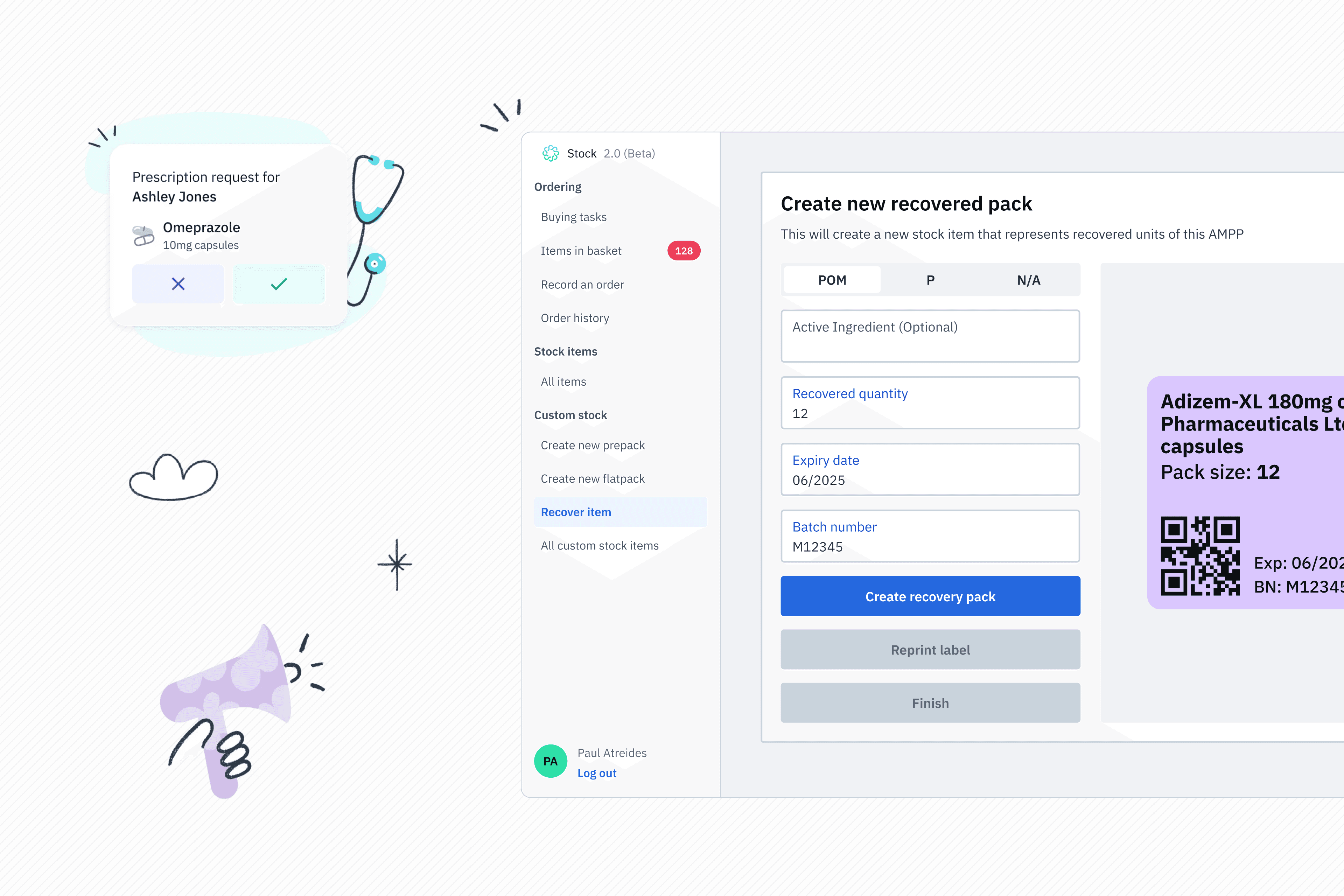
The £3.18 million annualised opportunity Jack identified while Principal Engineer at LloydsDirect became clear through warehouse observation and work with dispensary staff.
Who we talk to (and what we ask)
A typical Phase 0 week involves time with five categories of person.
Operations leaders. What's keeping them up at night? What metric do they wish would move? What have they tried that didn't work? Where do they spend money they wish they didn't have to?
Front-line staff. What's the actual workflow? Where do they wait? What information are they missing? What do they do over and over that they wish a computer would do? What do leaders think happens vs what actually happens?
Finance. What are the largest cost lines? What are the largest variance drivers? Which operational changes would they pay to make happen?
Data and IT. What systems hold the data? What APIs exist? What does the data look like in practice (not in the schema)? What's been promised but isn't actually shipped?
One sceptical voice. Someone in the business who is openly unconvinced AI will help. Their objections are the ones we need to address. Skipping this voice is how AI projects fail in adoption.
The interviews are deliberately specific. We don't ask "what would you do with AI?" We ask "show me what you did yesterday." The difference is enormous.
What we look at
Three categories of artefact get attention during the embed.
Operational data. Transaction history, throughput metrics, error rates, time stamps. We pull samples. We look at distributions, not just averages. We look at the outliers, because outliers are usually where the lever is.
Workflow tools. The spreadsheets, the email threads, the WhatsApp groups, the shared docs. The unofficial tools usually reveal where the official tools are inadequate.
Existing systems. What's already automated. What's manual. What's been built and abandoned. The pattern of past attempts predicts what will succeed now.
We deliberately don't spend time on the polished decks or the formal strategy documents. Those describe the business the leadership wants to be. We need the business that actually exists.
Day-by-day shape
A standard one-week embed roughly:
Day 1: Calibration. Start with operations leadership. Get oriented to the business, the team, the systems. Identify the people we need to spend time with this week. Get access set up.
Day 2: Workflow shadowing. Ride along with front-line staff. Watch what they actually do. Take notes on time spent, frictions, and information gaps.
Day 3: Data archaeology. Sit with the data team. Look at the actual data, not the schema. Pull samples. Score data conditions against our framework.
Day 4: Numbers conversations. Sit with finance. Understand the cost structure. Identify the workflows with the largest financial weight. Map the candidate AI levers to financial impact.
Day 5: Synthesis and pressure-test. Draft the recommended lever. Present it to the sceptical voice. Stress-test against objections. Refine.
Day 6: Write-up. Produce the written case. The lever, the proposed system, the realistic cost, the timeline, the operational metric it should move, the data conditions, the risks.
Day 7: Presentation and Q&A. Walk leadership through the case. Take questions. Adjust where the case lands wrong.
The shape varies. Some businesses need more shadowing time. Some need less. We adjust based on what's revealing the most signal.
What we produce
The deliverable at the end of Phase 0 is a single document, typically 8 to 14 pages. It contains:
The recommended lever. One sentence. The workflow where AI should be applied, and the operational number it should move.
The current state. What's happening today. The cost or volume baseline. The variance drivers.
The proposed system. What gets built. The data inputs. The expected outputs. The human-in-the-loop boundaries. Not a technical spec, an outcome description.
The cost and timeline. Fixed-price estimate for Phase 1 build. Realistic timeline. What's included, what's not, what assumptions are being made.
The success metrics. What we'll measure to know whether it's working at 30 days, 90 days, 6 months.
The data conditions assessment. Honest scoring of data quality, completeness, accessibility, and labelling. With remediation work flagged if needed.
The risks. What could prevent this from shipping. What could prevent it from working once shipped.
The alternatives. The levers that were not recommended, and why not.
If your audit consultant produces a 60-slide deck at the end of a discovery week, they didn't do this work. They did marketing. There's a difference.
What doesn't happen during the embed
A few things we deliberately don't do during Phase 0.
We don't pre-decide what to build. The point of the week is to find the lever, not to confirm the lever we were planning to build anyway. If we go in with a solution looking for a problem, we'll find a way to fit it. That's how the wrong project ships.
We don't try to fix what we see. Plenty of small operational improvements become visible during the embed. We note them, mention them in the final write-up, but we don't try to implement them mid-audit. Phase 0 has one job: find the lever.
We don't sell. The most useful Phase 0 audits are the ones where we recommend the client not do an AI project, because the lever isn't there or the data isn't ready. If we're using the audit as a selling exercise, we'll find a reason to recommend a build every time. That's not honest work.
The questions clients ask before they sign Phase 0
A few questions that come up, and our honest answers.
Will you sign an NDA? Yes, always. Standard mutual NDA. The work doesn't proceed otherwise.
Will you actually walk away if the lever isn't there? Yes. The phased model only works commercially because we mean it. If we always recommend a Phase 1 we never decline, we're not running an audit, we're running a sales process.
What if we don't like the recommended lever? Then we discuss. The audit is one input. If you have context we don't, your judgement should factor in. We won't tell you "trust us, do this" without explaining the reasoning, and you don't have to commit if the case doesn't convince you.
Can we just have the data conditions assessment without the full embed? Sometimes. If you already know the workflow you want to address and you just need to know whether your data is good enough, a 3-day data audit is a sensible standalone product. Most engagements benefit from the full week.
The bottom line
A Phase 0 audit is one to two weeks of embedded work that produces a single document and a clear go/no-go decision. It costs less than the SGD 80k that gets wasted on the wrong AI project. It catches the data problems, the wrong-lever problems, and the adoption problems that would otherwise surface in month four of a doomed build. If your AI consultant doesn't offer this kind of audit, you're paying for a different kind of service. Useful in its own way, but not the same thing.
This article was written by the team at
We Are Heylo
We're an AI consulting and product engineering studio for operators who need the numbers to move. Singapore-based.
Related articles
How to Find the Operational AI Lever in Your Business: A 5-Step Audit Framework
Most AI projects fail because they target the wrong problem. This is the framework we use to find the lever AI can actually pull inside a real operation.
AI for Healthcare in Singapore: Operational Use Cases (Not Diagnosis)
The AI use cases that actually deliver value in Singapore healthcare in 2026 are operational, not clinical. Here's where to start and how to think about HSA, PDPA and consent.
How to Integrate AI Into Your Singapore Business (2026 Guide)
A practical framework for Singapore businesses ready to use AI, from identifying the right use cases to building production systems that actually deliver ROI.