10 May 2026
AI for Healthcare in Singapore: Operational Use Cases (Not Diagnosis)
By We Are Heylo
Most "AI in healthcare" coverage in Singapore is about diagnosis. Radiology models that read scans, chatbots that triage symptoms, decision support tools for clinicians. Some of this work matters. None of it is where most Singapore healthcare organisations should start their AI strategy.
The fastest, lowest-risk, highest-ROI AI work in Singapore healthcare in 2026 sits in operations. Scheduling, claims, documentation, supply chain, patient communication. The work that pays back inside a year, doesn't touch a clinical decision, and stays comfortably inside HSA, PDPA and Healthier SG compliance boundaries.
Why operational, not clinical
Three reasons.
Regulation. HSA classifies AI tools that influence clinical decisions as medical devices. The compliance pathway is real, slow, and expensive. Operational AI tools don't fall under medical device regulation, which means they ship in months rather than years.
Liability. A clinical AI tool that contributes to a misdiagnosis has a clearer liability path. Operational AI that schedules appointments more efficiently doesn't carry the same risk.
Adoption. Clinicians are (rightly) sceptical of AI tools that interfere with their judgement. Operational staff are far more open to AI that reduces their admin load. The team that approves the project is the team that benefits.
For a Singapore healthcare organisation building its first AI capability, the operational path is the sensible one. Diagnostic AI can come later, once the organisation has internal experience.
Six operational use cases that pay back
1. Appointment scheduling and optimisation
What it is. AI optimises clinic schedules by combining historical no-show data, procedure durations, resource constraints, and patient preferences. Reduces gaps, reduces overruns, lifts utilisation.
Why it pays back. Most Singapore specialist clinics run at 60 to 75% effective utilisation. AI scheduling can push this to 80 to 88%, materially increasing capacity without adding rooms or doctors.
Realistic cost. SGD 40,000 to SGD 100,000 for a layer on top of your existing practice management system. Lower with SaaS like Vetspire or Spruce that have built-in optimisation.
Payback. 4 to 9 months for a clinic running 30+ patients a day per practitioner.
2. Claims preparation and denial prediction
What it is. AI reads consultation notes, pulls the relevant codes, prepares insurance claims, and predicts which claims are likely to be denied before submission. Flags the ones to review.
Why it pays back. Claim denials in Singapore healthcare typically run 8 to 18% on first submission. Most denials are preventable with better coding and supporting documentation. AI catches the patterns humans miss.
Realistic cost. SGD 60,000 to SGD 150,000 for a custom build over your specific payer mix.
Payback. 6 to 12 months for clinics processing 500+ claims per month.
3. Clinical documentation assistance
What it is. Ambient AI listens to consultations (with consent) and drafts SOAP notes, referral letters, and discharge summaries. Clinician edits and signs off.
Why it pays back. Specialists spend 1 to 2 hours per day on documentation. AI scribing cuts this by 50 to 70%, returning time directly to patient care or to seeing more patients.
Realistic cost. Mostly SaaS now. SGD 200 to SGD 600 per clinician per month for tools like Heidi, Suki or Nabla, plus integration with your EMR.
Payback. 2 to 4 months for any clinician with material documentation load.
Compliance note. Patient consent is required and should be documented. PDPA requires clear notice of what's recorded, where it's stored, who can access it, and for how long.
4. Medical inventory and stock recovery
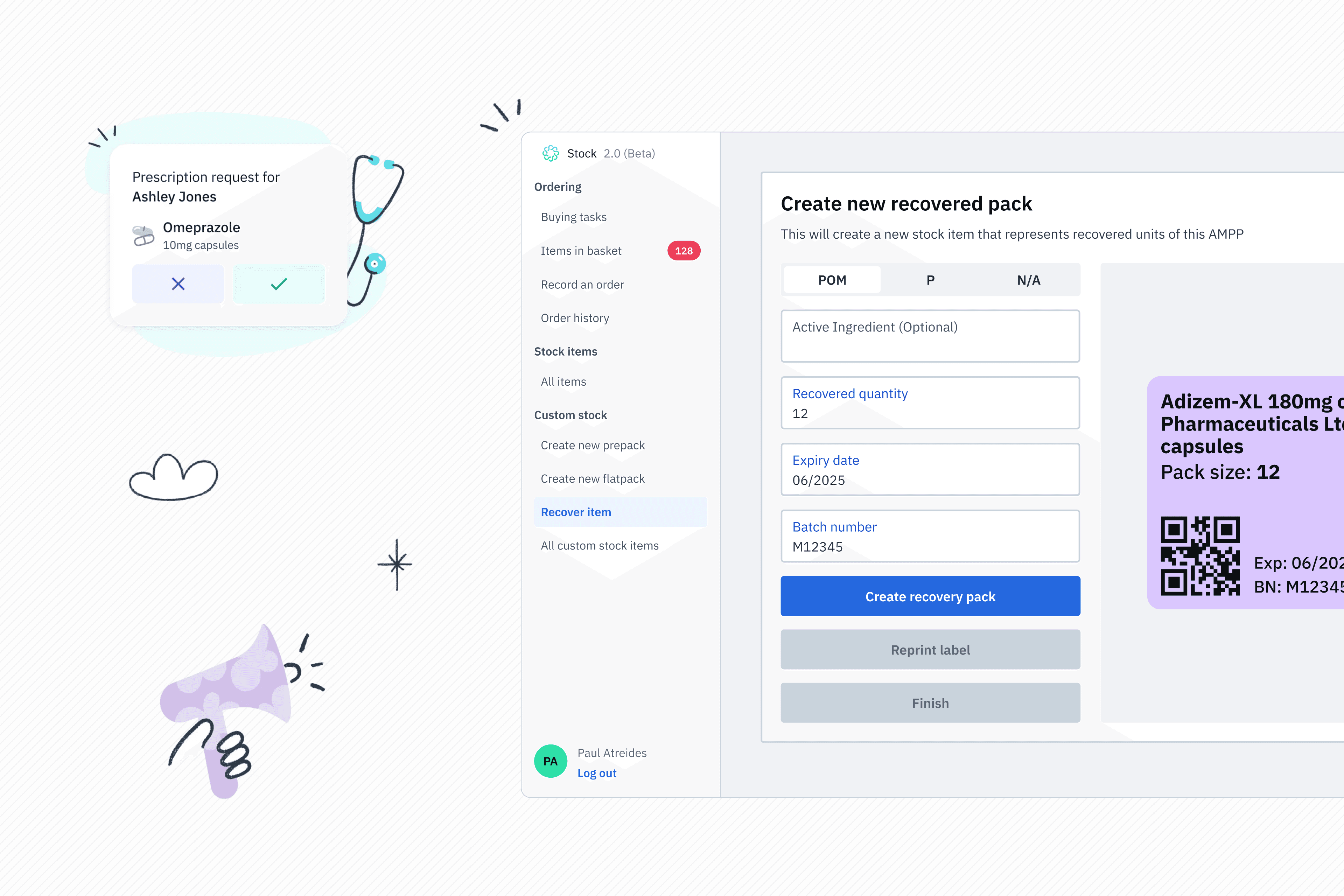
What it is. AI tracks consumables, drugs and equipment usage, predicts replenishment needs, and identifies stock that can be recovered or redistributed before expiry.
Why it can pay back. Jack's LloydsDirect work shows how a narrowly scoped stock-recovery workflow can support a quantified business case. The value in another operation depends on its own baseline, constraints and recoverable stock.
Realistic cost. SGD 50,000 to SGD 130,000 for a custom build integrated with your stock system.
Payback. 4 to 10 months. Compounds with prescription or procedure volume.
5. Patient communication and reminders
What it is. AI sends appointment reminders, follow-up communications, prep instructions and care reminders via WhatsApp, SMS or email. Handles routine replies. Escalates the rest.
Why it pays back. No-show rates in Singapore specialist clinics often run 10 to 20%. AI-assisted reminders bring this down by 30 to 50% of baseline. Each prevented no-show is recovered revenue.
Realistic cost. SGD 25,000 to SGD 70,000 for a system tailored to your specialty, comms preferences, and PDPA workflow. Lower with SaaS like Twilio Engage plus customisation.
Payback. 3 to 6 months.
6. Internal knowledge retrieval
What it is. A RAG system over your clinic's protocols, policies, drug formulary, and SOPs. Staff (clinical and admin) ask questions in natural language and get cited answers from your own documents.
Why it pays back. Most clinics have institutional knowledge spread across SharePoint folders, Notion pages, paper binders and senior nurses' memories. Search is broken, onboarding takes too long. A RAG layer fixes both.
Realistic cost. SGD 30,000 to SGD 80,000 for a custom RAG build, with ongoing curation.
Payback. 5 to 10 months, but the secondary benefit (faster onboarding of new staff) compounds.
Compliance reality
A few notes on the specific Singapore healthcare compliance posture.
HSA medical device classification. Operational AI tools that don't influence clinical decisions are not medical devices. Tools that do influence clinical decisions (diagnosis, treatment, dosing) typically are, and require HSA approval. Stay on the operational side of this line and the compliance overhead drops materially.
PDPA in healthcare. Standard PDPA applies, with extra sensitivity around health data. Practical implications: data stays in Singapore where possible, consent is documented for each new use case, access is logged, and you have a way to honour data deletion requests.
Healthier SG and AIC integration. If you participate in Healthier SG or share data with the Agency for Integrated Care, your AI tools need to align with the data-sharing protocols already in place. Coordinate with your liaison before deploying anything customer-facing.
Singapore's National AI Strategy 2.0. Healthcare is a priority sector. The funding and grant landscape is more favourable here than in most industries. Worth scoping any significant project with the Enterprise Development Grant or sector-specific schemes.
What we'd skip
A few use cases that look attractive but rarely justify the build cost in a typical Singapore healthcare context.
AI symptom triage chatbots. Hard to make safe. Hard to gain trust. Often duplicates what your front-of-house staff already do well.
AI in clinical decision support. Real value, but the regulatory path makes the project a 12 to 24 month commitment minimum. Wait until you have operational AI experience first.
AI for personalised treatment plans. Promising research direction, not yet a reliable production capability at SME scale.
A starting point
If you run a Singapore clinic, group practice, or healthcare service business and you want a first AI project that ships in 2026, the highest-leverage starting points are:
- For a single-specialty clinic: Documentation assistance (lowest cost, fastest payback) + scheduling optimisation
- For a multi-clinic group: Claims denial prediction + inventory recovery
- For a pharmacy or dispensary: Assess stock recovery against the operation's own baseline, then consider patient communication
- For an aged care or community health provider: Knowledge retrieval (RAG) + appointment scheduling
The bottom line
Healthcare AI in Singapore in 2026 should start operational, not clinical. The regulatory path is faster, the adoption is easier, and the ROI is real. Diagnostic and clinical AI can come later, once the organisation has built internal capability and trust. Most operational use cases here pay back in under a year and stay comfortably inside HSA and PDPA boundaries.
This article was written by the team at
We Are Heylo
We're an AI consulting and product engineering studio for operators who need the numbers to move. Singapore-based.
Related articles
AI for Finance Operations: 7 Use Cases That Pay Back in 6 Months
Operational AI use cases for finance teams in Singapore SMEs. Real numbers, real time-to-value, and the ones that quietly fail in production.
AI for Manufacturing in Singapore: Where to Start (and Where Not To)
Operational AI use cases for Singapore manufacturers. Predictive maintenance, quality inspection, demand forecasting and what actually delivers ROI in 12 months.
How We Embed in a Business for a Week (the Operational AI Audit)
An honest walkthrough of what happens during our Phase 0 audit week. Who we talk to, what we look at, what we produce, and why most consultants skip this work.